
Violin Gallery provides evaluation-first string instrument restoration in St. George and Southern Utah. We look at the instrument as a whole, discuss what you hope to preserve or return to use, and determine whether a larger restoration project makes practical sense before recommending major work.
Older, damaged, or historically interesting violins, violas and cellos can develop several related problems at once. Cracks, open seams, previous repairs, neck or structural concerns, varnish damage and years of wear may need to be considered together rather than treated as isolated fixes.
The goal is not automatically to make an old instrument look new. Good restoration should respect the instrument’s age and character while addressing the structural, functional and setup work needed to preserve it and, when appropriate, return it to playing condition.
Not every crack, buzz or open seam is a restoration project. Routine repairs are usually focused on correcting a specific problem. Violin restoration becomes more appropriate when the condition of the whole instrument, its history and several related issues need to be considered together.
Routine repair A specific functional problem such as an open seam, bridge issue, setup concern or isolated structural repair. Send these customers to the Repairs page.
Instrument restoration A more extensive project involving multiple issues, age-related damage, significant previous repairs, structural instability or preservation concerns that should be planned as one larger strategy.
Sometimes the answer is both A restoration may include many individual repairs, but they are sequenced as part of one coordinated preservation and function plan.
Sometimes a violin restoration project is not recommended Age alone does not make an instrument worth restoring. We consider expected results, condition, cost, market context when relevant, and the owner’s goals before recommending extensive work.
Restoration may be worth evaluating for antique or heirloom instruments, instruments that have been stored for many years, or violins, violas and cellos with multiple cracks, neck or button issues, rib or plate damage, previous repairs or other concerns that affect the instrument as a whole.
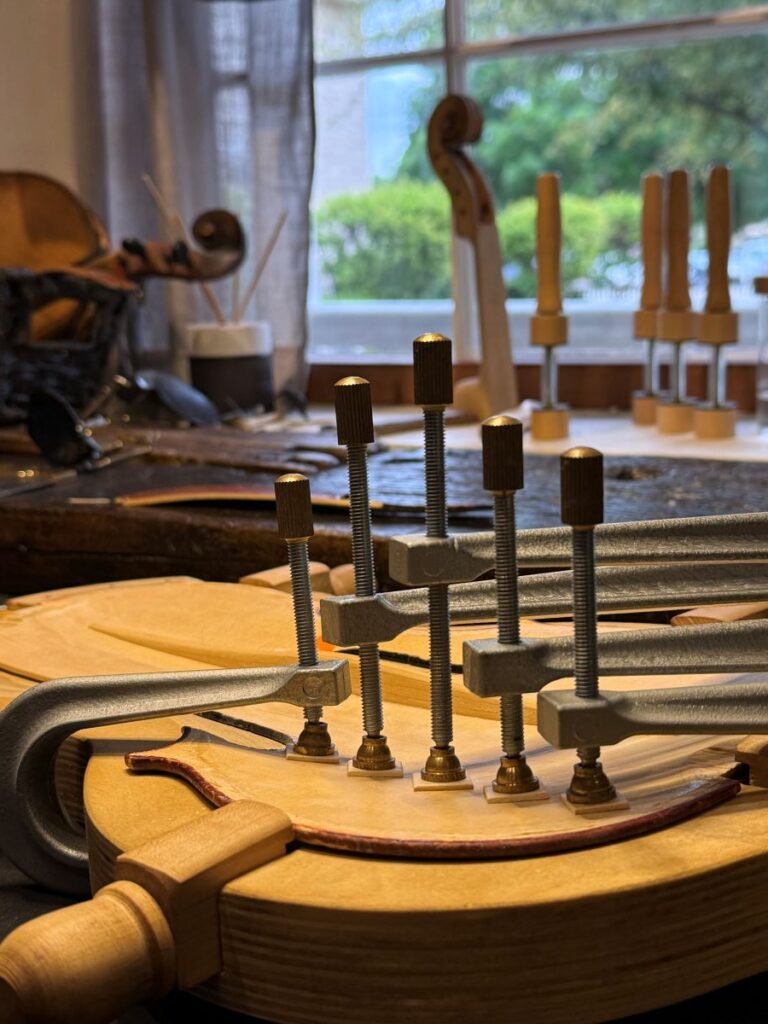
Thoughtful violin restoration in St. George and Southern Utah should not begin with an automatic list of procedures. We first evaluate the instrument, previous work and the owner’s goals so the restoration plan reflects what the violin, viola or cello actually needs.
We examine cracks, open seams, neck and fingerboard condition, setup, varnish, structural concerns and previous repairs that may affect stability, appearance or playability.
The goal may be stabilization, returning the instrument to regular playing condition, preserving a family heirloom or improving appearance where appropriate.
Age, wear, original materials, past repairs, and previous craftsmanship can be part of an instrument’s character. Good restoration does not mean erasing every sign of its history it is also preserving character.
Before major double bass, cello, viola or violin restoration begins, we discuss whether the expected result reasonably supports the timeframe, complexity, and all cost involved.
Older instruments frequently contain copied or model labels. A famous name alone does not authenticate the maker, so identification is based on evidence the instrument can reasonably support.
If the instrument’s value also needs to be documented for insurance, donation or personal records, that is handled separately through our Instrument Valuation service.
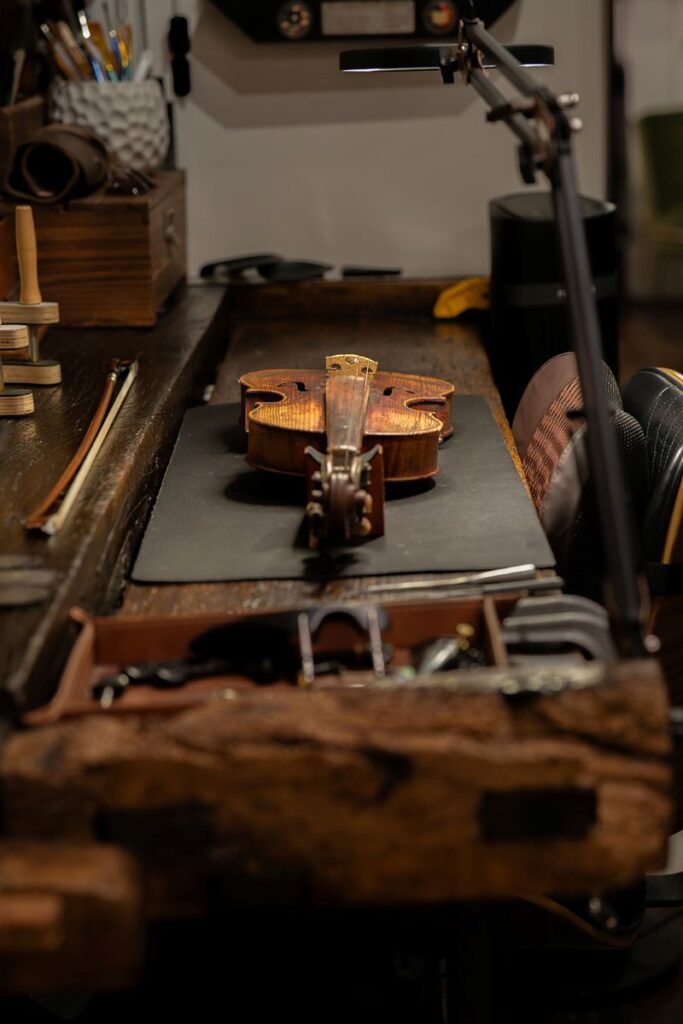
Restoration is usually slower and more deliberate than routine repair because the work often happens in a specific sequence. Structural repairs may need to be completed before setup or cosmetic work, and many steps require drying, curing or settling time before the next stage can begin.
1. Evaluation We inspect the instrument and discuss its known history, current condition and your goals.
2. Scope & Estimate We explain the recommended priorities, estimated cost and expected timeline before major work begins.
3. Approval No major restoration work begins until the proposed scope is understood and approved.
4. Restoration Work proceeds in the appropriate order. We do not rush a stage when doing so could compromise the quality or stability of the repair.
5. Final Setup & Review After structural work is complete, the instrument is set up and reviewed before it is returned.
Complex restoration projects can take months depending on the scope, required materials, drying time, current bench workload and anything discovered once work is underway. Major restoration capacity is limited, so not every project can be accepted immediately.
Violin Gallery primarily serves restoration customers who can bring their instruments to our St. George shop. Photos can be useful for an initial conversation, but a major restoration scope cannot be determined reliably until the instrument is physically evaluated.
Some restoration projects begin because an instrument has been in a family for generations. Others involve antique or vintage instruments with uncertain history that have not been played in decades. An instrument does not have to be rare or exceptionally valuable to matter to its owner. At the same time, sentimental value and market value are different things. We can help evaluate the physical condition, discuss what restoration may realistically accomplish and explain when a valuation or more specialized expertise should be considered before committing to extensive work.
Bring your Violin in for an evaluation and we will help you understand its condition, what restoration may involve, and whether it makes sense to proceed.