
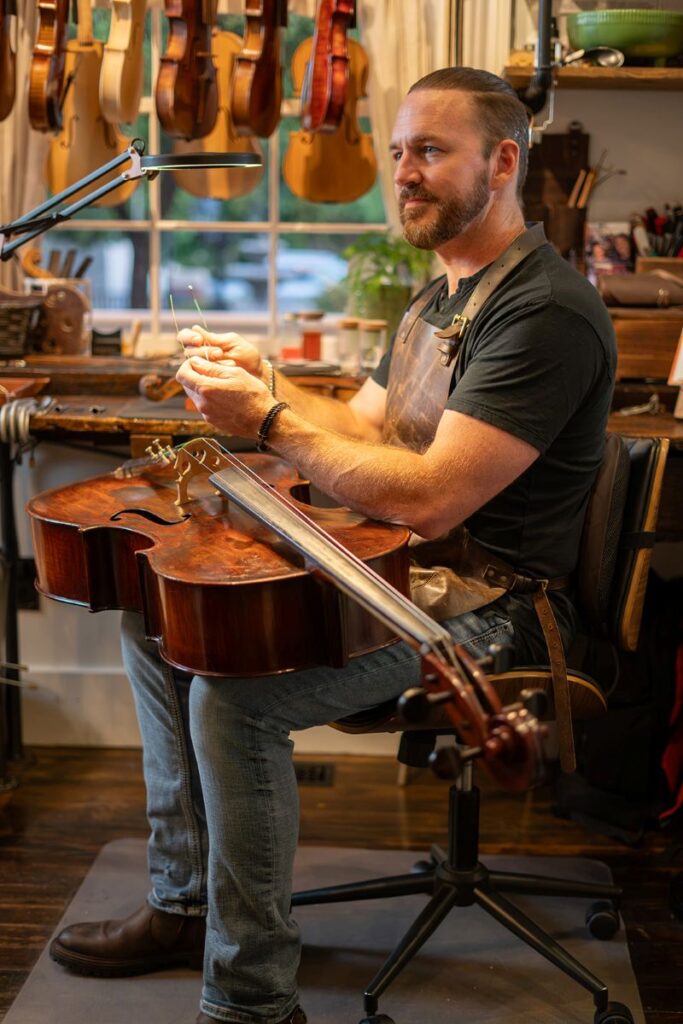
Our in-house luthier approaches every cello, double bass, viola, and violin repair and adjustment with careful attention to detail. When something on a string instrument shifts, loosens, buzzes or stops working correctly, small problems can quickly become frustrating for the player.
From small fixes to major restoration we treat every instrument like it is our own.
Proper setup affects how easily a violin, viola or cello tunes, responds and feels under the player’s hands. If an instrument has become difficult to tune, uncomfortable to play or noticeably different in response, a setup evaluation can help identify what has shifted.
Bridge & Soundpost Position and fit can affect response and stability. These should be evaluated rather than moved casually at home.
Pegs & Tuning Slipping or sticking pegs can make daily tuning unnecessarily difficult.
Fingerboard & String Height Wear or setup changes can affect action, comfort and clean playing.
Strings & Fittings Strings and related fittings may need replacement, adjustment or confirmation that the correct part is being used.
General Setup Check Useful when an instrument has been stored, purchased secondhand, shipped, or simply does not feel right.
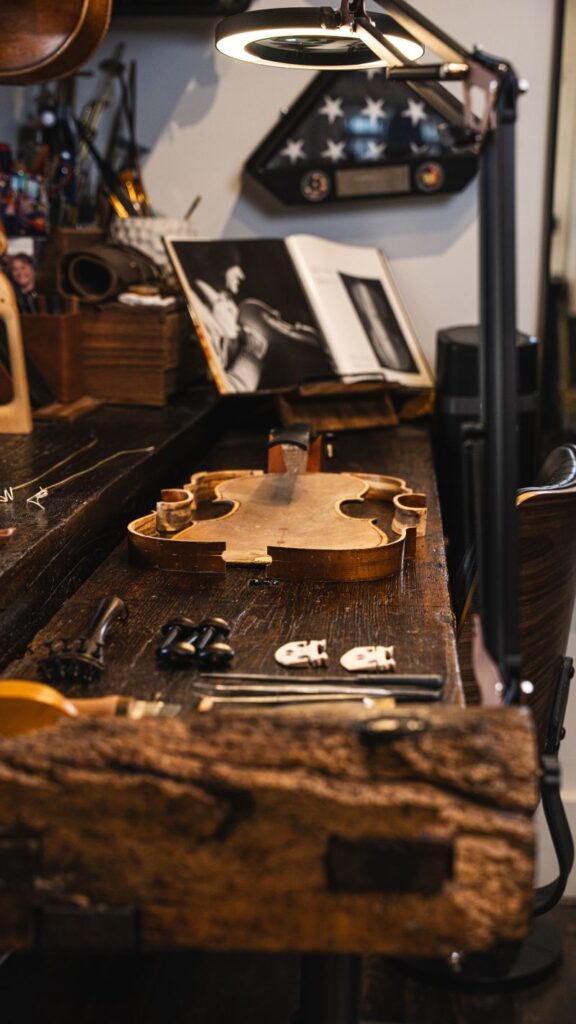
Buzzing or rattling A new buzz can come from setup, fittings, seams or other parts of the instrument and is worth checking.
Bridge looks tilted or out of place Bridge position matters. If it has shifted, do not force it back if you are unsure what to do.
A seam is opening Open seams can happen with changes in humidity and use. Don’t Panic – Your instrument is put together we a special glue that is supposed to come apart which helps prevent large face or back cracks. Bring the instrument in before the seam opening becomes larger.
Strings are unusually high or low Action and setup affect comfort and playability and may point to bridge, fingerboard or neck concerns.
Something cracked, broke or came loose Structural damage should be evaluated before continued playing or home repair attempts.
Instrument suddenly feels harder to play Changes in setup can affect response, comfort and tone even when nothing looks obviously broken.
Not sure — it just does not seem right That is enough reason to have it looked at. Tell us what changed and when you first noticed it.
Some maintenance is appropriate for players to handle. Structural repairs and setup corrections are different. If you are unsure whether a bridge, seam, crack, peg, neck or other part should be moved, glued or forced back into place, stop and have the instrument evaluated first.
Do not use household glue Instrument repair adhesives and repair methods are chosen so future cello, viola or violin repair work remains possible. The wrong glue can permenantly damage the instrument.
Do not force shifted parts A bridge, peg or fitting that moved may be telling you something else about the setup or environment.
Keep broken pieces If a piece comes off, save it and bring it with the instrument.
Reduce tension only when appropriate If there is serious structural damage, contact the shop for guidance rather than guessing at the safest next step.
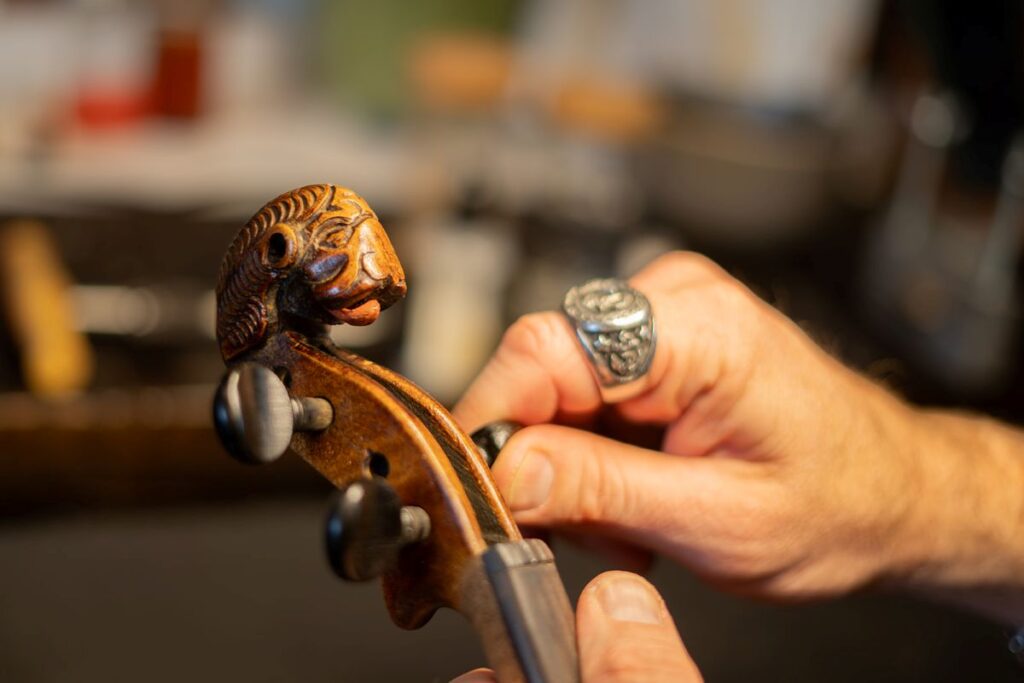
Instrument repair needs vary widely, so the cello, violin, or viola will be inspected before a meaningful estimate can be given.
Instruments brought to the store will be assigned a work order. We will look at the instrument thoroughly and then discuss with you any recommended work. Repair work will not start until it has been approved.
Bring your violin, viola or cello into Violin Gallery and we’ll create a repair work order for you.
If you would like to speak with the luthier at drop-off, please call ahead so we can make sure someone is available to meet with you.
We’ll review the instrument carefully and contact you with our findings, recommended work and an estimate before moving forward.
After drop-off, we carefully evaluate your instrument to determine what is causing the problem and what work is actually needed.
Our violin repair in St. George includes looking beyond the obvious issue for anything that may affect the repair or the way the instrument functions.
Once the evaluation is complete, we’ll explain what we found and what we recommend.
After evaluating your instrument, we’ll prepare an estimate based on the repairs and materials we believe are needed.
Whether you need a violin repair or a cello repair, we’ll contact you with the recommended work and expected cost before you making a decision.
If there are different repair options or priorities to consider, we’ll explain those as part of the estimate.
No repair work begins until you have had an opportunity to review and approve estimate.
If you have questions, want to discuss priorities or need clarification about a repair, we are happy to walk through the options with you.
Once we receive your approval, your instrument can move into the repair process and our current work queue.
Quality repairs often require multiple steps, including drying or curing time between stages, and we will not rush work when doing so could affect the result.
As one of the few luthier shops providing violin and cello repairs in Southern Utah there can be a waiting list.
If needed, a complimentary beginning-level rental instrument may be available.
Violin Gallery works with school orchestra programs on instrument repairs, inventory triage and broader program support.
Washington County School District In order for the Violin Gallery to help support the local music community, teachers in Washington County School District have access to an annual repair-credit benefit.
School Inventory Triage For groups of school instruments, we can help identify what is worth repairing, what may need replacement and what should be prioritized first.
Regional School Support Schools and districts across Utah, Nevada and Arizona can work with Violin Gallery on broader orchestra-program purchasing and support to include bulk purchasing. The Washington County repair-credit benefit is district-specific.

Violin Gallery helps keep music going with knowledgeable double base, cello, viola, violin repair in St. George and supports surrounding areas in Southern Utah, Mesquite Nevada and Page Arizona areas.